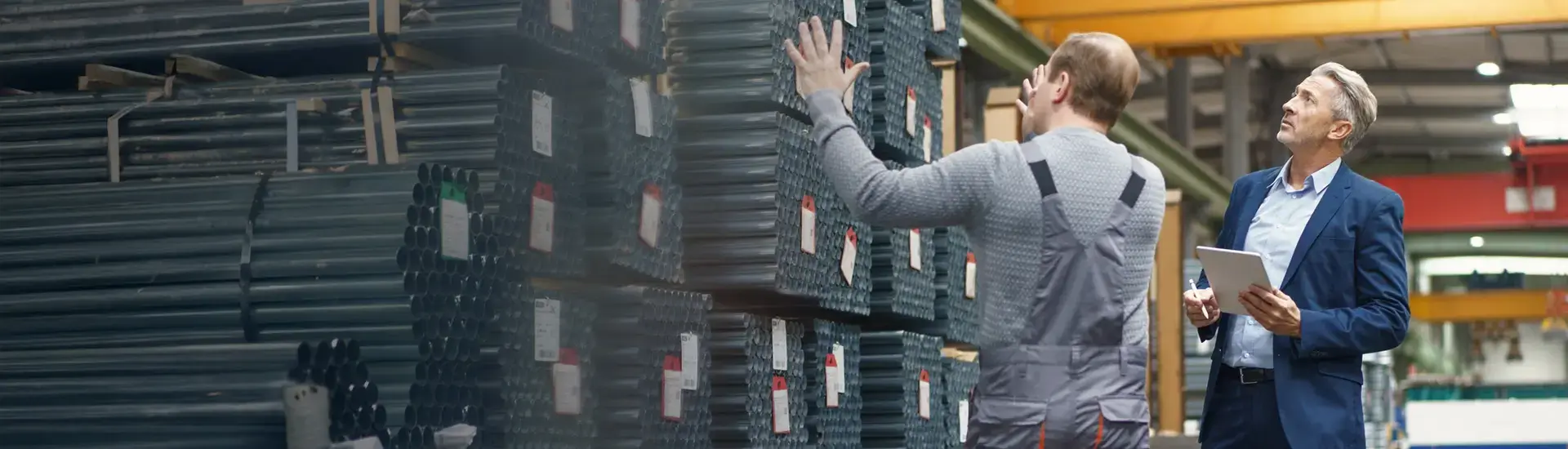
In an increasingly dynamic market environment, production is faced with the task of combining stability in day-to-day business with continuous development. Increasing costs, volatile supply chains, growing variant diversity and high demands on quality and efficiency characterize day-to-day production. In this area of conflict, production management plays a central role: production managers control processes, capacities and resources, ensure reliable workflows and create transparency regarding performance and potential for improvement. As Head of Production, they combine operational control with strategic orientation and ensure that production remains competitive in the long term.
Increasing demands on the efficiency of processes and control
Production areas today are confronted with a multitude of parallel requirements: lot sizes are getting smaller, product cycles are shorter and planning assumptions are losing their validity more quickly. Deviations in the material flow, unplanned downtime or quality issues have a direct impact on deadlines and costs. Production management is therefore faced with the task of keeping complex processes controllable at all times and remaining capable of acting even in the event of disruptions.
Production management ensures stability and develops processes further
Production managers ensure clear structures in day-to-day business and create transparency regarding performance, quality and use of resources. They manage capacities, prioritize orders and establish standards that stabilize processes and make them reproducible. As Head of Production, they also drive the continuous development of production - for example through improved interfaces,more efficient processes and the targeted use of methods such as shopfloor management or lean. This results in production that functions reliably even under changing conditions.
Interim production managers: structure, stability and implementation power for production
When pressure arises in production - for example due to vacancies, bottlenecks, quality deviations or unstable processes - interim production managers quickly provide orientation and the ability to act. They assume responsibility in production management, create transparency regarding priorities and key figures, stabilize processes in day-to-day business and improve interfaces to logistics, maintenance and quality. As Head of Production, they also consistently drive improvement programs, implement standards and guide employees safely through change phases - pragmatically, solution-oriented and with a clear focus on measurable results with high delivery capability, maximum quality and low costs.