on
World Child Forum: Simply because it is important
on
Normally, you would read about HR and business topics here. But not in this article. The topic is simply too important to go unnoticed: The future of our children - and therefore the world we all live in. Giving children and young people around the world not only a platform for exchange, but also a politically heard voice, is the aim of the World Child Forum, which took place for the first time in Davos from July 19 to 21. As a company, we not only support this unique and globally relevant initiative, but also spoke to its founder Bernhard Hanel. And Tilo Ferrari explains afterwards what all this has to do with #generationinterim.
Dear Bernhard, the World Child Forum took place for the first time this year. What was your motivation for organizing such an event?
Bernhard Hanel: Well, I have to say something right at the beginning. For my birthday a few years ago, my colleagues gave me a stay at the Hotel Waldhaus Sils - a long-cherished dream. There I read the book "The Great Reset" by Klaus Schwab, the founder of the World Economic Forum. On the third night, I suddenly woke up with the feeling that something fundamental was wrong. I thought about it and finally came to the conclusion that the World Economic Forum is not the promising place it is being sold as. Because something very important is missing there: children and young people. Their voices are not being heard. That very night, in April 2021, I acquired all rights to the World Child Forum. Surprisingly, nobody had secured them yet. At the time, I didn't realize what that would lead to later on.
What happened next?
BH: I've always brought up the topic in the talks I give from time to time. The response was exclusively positive. Many people encouraged me to pursue the idea further. Over time, more and more supporters joined in. Eventually, a core group came together that met in weekly online meetings and turned an increasingly tangible vision of a world children's form into a reality.
How did you decide on Davos as the venue?
BH: Basel was initially considered as the location, an open and cosmopolitan city. The Theater Basel would have made its premises available to us free of charge for four days as a venue partner. At this point, Andrea Hämmerle, a Swiss politician, became aware of us. His opinion was that there was only one possible location for the World Child Forum: that of the World Economic Forum. And yes, he was absolutely right. This is the only way we can convey completely different images of the same place to the world. Andrea Hämmerle then made contact with the mayor of Davos, Philipp Wilhelm. He was immediately on fire for our idea and assured us of his full support.
What were the reactions to Davos as the location for the WCF?
BH: Being able to name Davos as the location made a lot of things easier. Because suddenly we no longer had to explain what the World Child Forum is. In combination with Davos as the venue, our ambition is completely clear. The marketing was a no-brainer, but not the search for sponsors. Many companies, foundations and private individuals are interested in the World Child Forum. But they wanted to wait for the first event and then support us next year. This led to the absurd situation that everyone patted us on the back, but there was not enough funding. Unfortunately, we were still missing a certain amount of money.
So the World Child Forum was on the brink?
BH: No. Cancellation was never an option for us. I must not conceal the fact that we could have raised the missing money - if we had enabled companies as official sponsoring partners to participate in an influential way in their own interests. But we expressly did not want that. It was important to us that the first WCF did not have a theme and that the children and young people were completely free to choose their own topics. Anyone who wants to is welcome to support us with a voluntary donation - simply because he or she thinks what we are doing is right.
Who and how many children took part?
BH: A total of 130 children from 24 countries took part. To keep the costs manageable, we initially planned to invite children and young people with roots in different countries who are already in Germany or neighboring European countries. However, the international aspect quickly took on a life of its own. We actually received requests from all over the world - and we didn't want to turn anyone down. A group from Tanzania, for example, presented an inspiring school project. Flying these people to Switzerland and accommodating them cost around 20,000 euros. By comparison, participation in the WEF costs just over 42,000 euros per person. It was important to us that the children and young people didn't have to pay anything. And Switzerland is very expensive - especially as the logistics are challenging. After all, Davos is in the mountains.
Speaking of the WEF: how did the organizers of the World Economic Forum react to your event?
BH: Contact had already been established through the mayor of Davos. The WEF wanted to be present - which we declined. We wanted to wait for the first lab format and not have anyone from the WEF there yet. We simply didn't want to give the WEF a platform on which it could polish up its image. We want to approach the WEF in the fall and see what can happen.
Why is it so important to you personally to create a platform for children and young people with the WCF and give them a voice?
BH: I was at the WEF myself in 2023. What I experienced there were white, somewhat aged men holding the levers of power in their hands. But how are these people supposed to shape the future of our world if children and young people are left out? Children have visions. Children have an unbiased, unprejudiced view of things. Children have good ideas. And children are our future. It's as simple as that. We need to unleash the potential that lies dormant in so many children and involve them in a meaningful way. We must allow children to participate in important decisions - which, incidentally, is set out in Article 12 (respect for the views of the child) of the UN Convention on the Rights of the Child:
[...] the child shall, in particular, be given the opportunity to be heard in all judicial or administrative proceedings affecting the child, either directly or through a representative or an appropriate body in accordance with national procedural rules.
With the exception of the USA, all countries worldwide have signed the Children's Rights Charter.

The aim of the World Child Forum is to give children and young people a politically heard voice.
What goals are you pursuing as the initiator and organizer of the WCF?
BH: First and foremost, I want to have an impact on the WEF. I want people there to think about our message. I would like to point out that the World Child Forum is not an educational event, but a political one. We are not interested in organizing another children's congress. There are plenty of those. We want to be relevant to global politics.
Asking children and young people for their opinions is one thing. Implementing their ideas is another. How do you ensure that something really changes for the better in the long term?
BH: I am firmly convinced that it is possible to talk to everyone. Exchange always achieves something. We must succeed in reaching the WEF participants emotionally. Because they too are parents, grandparents, uncles and aunts. The future of our children affects them just as much as it does me. My goal is to find joint solutions for a more vibrant and creative world. The fact that we will be at the World Economic Forum in 2024 is a first victory for us.
The World Child Forum will be at the World Economic Forum?
BH: That's right! We will have a stand on the Arkadenplatz in Davos. That's where the real talks among the world's powerful people take place at the WEF. And we are right in the middle of it! We are also hoping for a speaker slot. My vision is that there will only be one World Forum. And I'm prepared to keep fighting for that.
Dear Bernhard, thank you very much for the interview!
Now, dear readers, you may be wondering: what does all this have to do with Deutsche Interim AG? Well, we believe that we would do well to listen to these young people. It is up to us to shape the earth and society in such a way that they are also worth living in for future generations. The children and young people of today will be the workers of tomorrow. If current studies are to be believed, the "I work in the same company from training to retirement" model will soon become extinct. The labor market is changing, and a functioning flexible workforce management is becoming a strategically relevant success factor. We must therefore prepare ourselves for the fact that all of our working lives will change today and in the future - possibly also in the direction of Interim Management due to the shortage of skilled workers.
In addition, we think it is simply right to support this initiative. Our CEO Tilo Ferrari talks about his reasons for doing so in an additional interview.
Dear Tilo, why is Deutsche Interim AG involved in the World Child Forum as a supporter? Firstly, Bernhard Hanel has been a friend of our family for many years and his professional commitment impresses me greatly. As the founder and managing director of KuKuk, he and his team develop, plan and build unique experiential and outdoor spaces for people of all ages across Europe. His artistically designed playgrounds - although this term actually falls far too short - invite people to climb, shimmy, jump and balance. They not only train motor skills, agility, strength, endurance and coordination, they also stimulate the senses and promote communication.
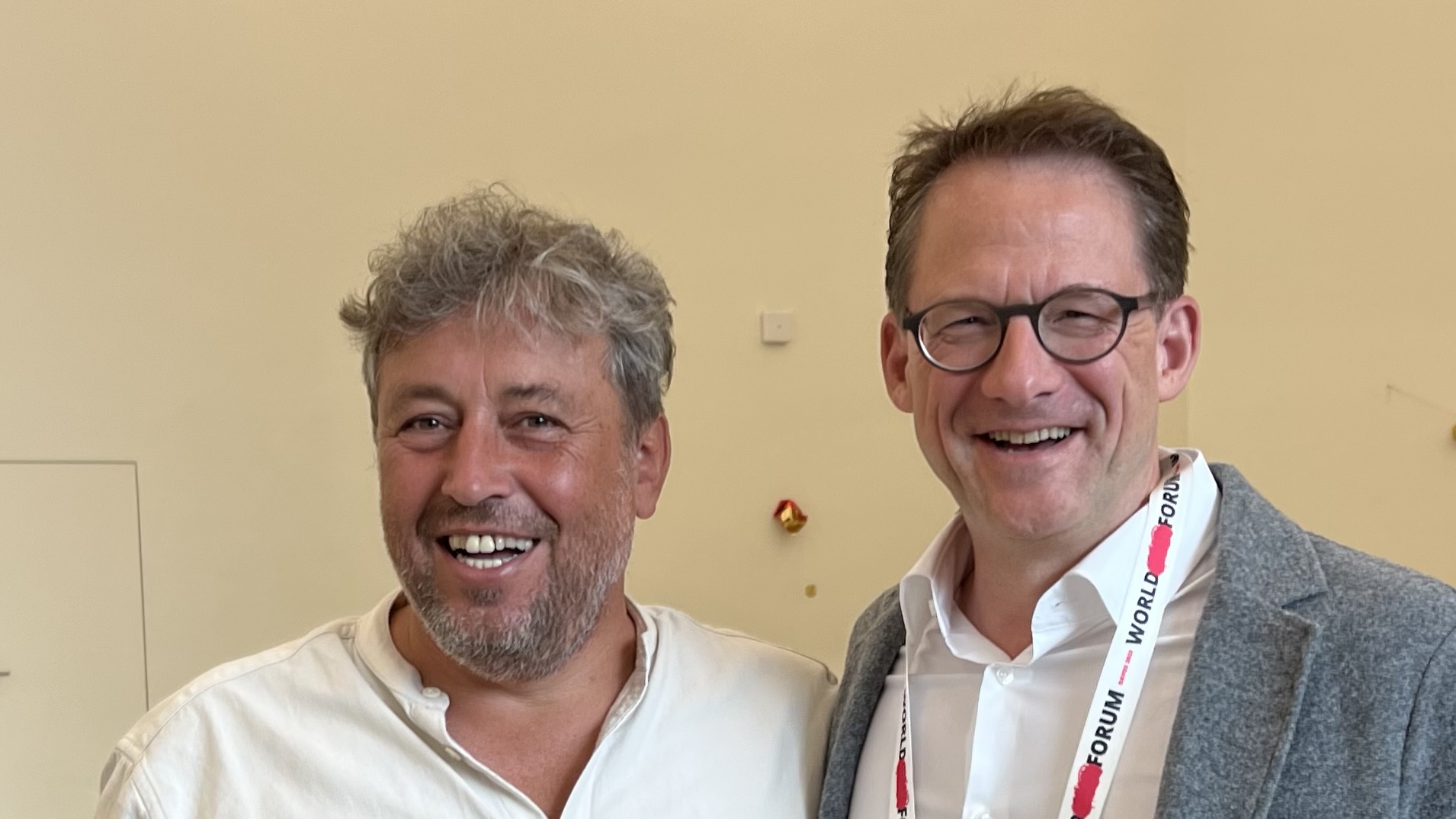
Bernhard Hanel (l.) and Tilo Ferrari at the World Child Forum in Davos.
On the other hand, I think it's important to promote intergenerational dialog. We should take a much closer look at what we pass on to future generations - and how we do it. We need to take more responsibility for our actions today and their impact in the future. I think we can get a lot of valuable input from children and young people here.
In addition, choosing Davos as the venue is a strong message in itself. This decision is smart and remarkable - and also a little provocative. After all, Davos is inevitably associated with the annual rendezvous of the world's economic and political elite. A location could hardly be more internationally relevant. For me, the fact that children and young people are allowed to discuss related issues in the same place expresses two things: The Word Child Forum confirms and criticizes the World Economic Forum in equal measure. What I find remarkable is that the event is more positive, creative and creative than pure protest movements such as "Last Generation" and "Fridays for Future".
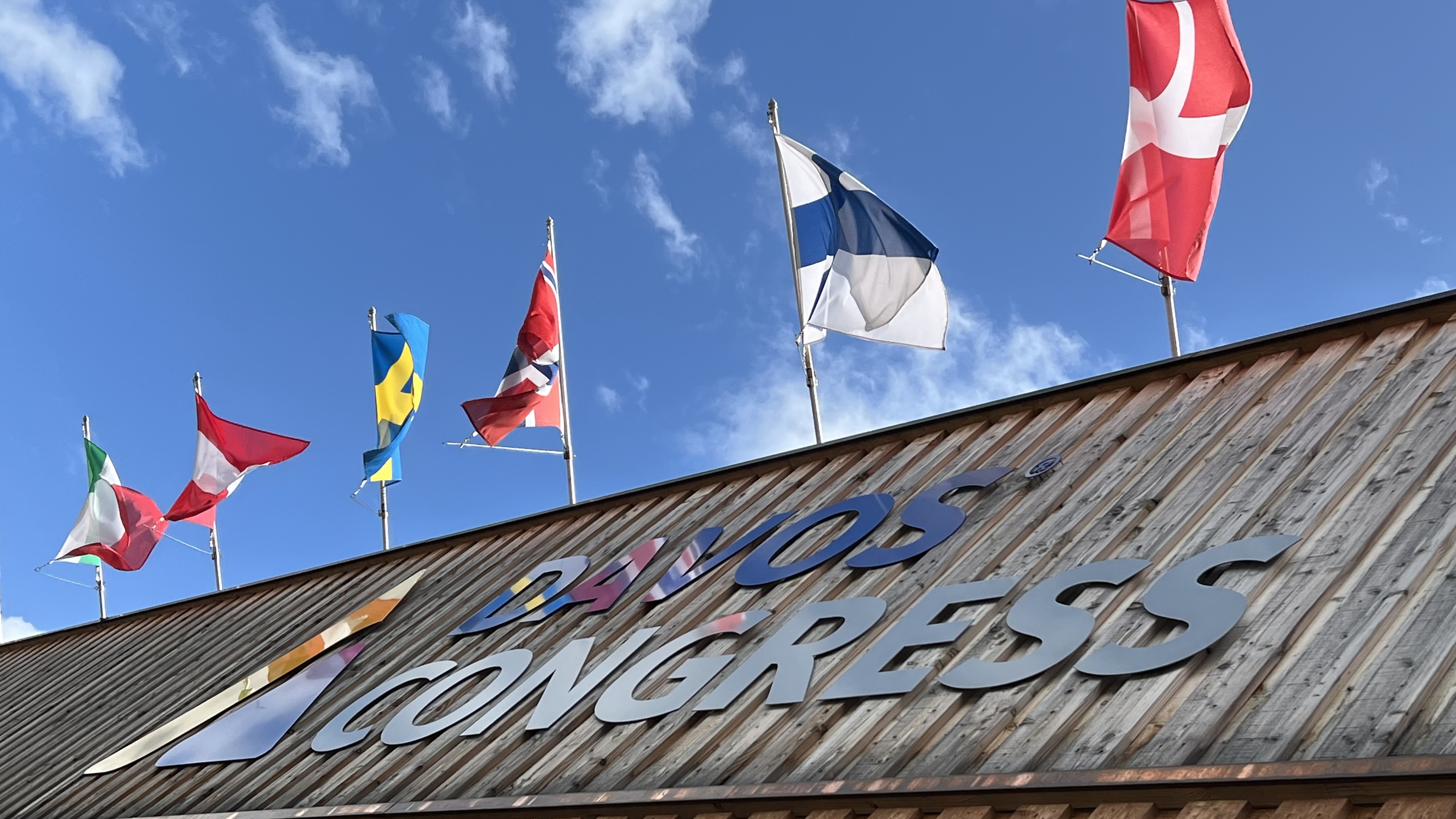
The World Child Forum takes place at the same location as the World Economic Forum.
What do you hope to achieve by supporting the WCF financially, but also in terms of content?
TF: Of course, the WCF can only work in the long term if children and young people from all over the world take part - including those who cannot afford to do so themselves. Thanks to our donation, more boys and girls were able to travel to Davos. I hope that our commitment will help the World Child Forum to become better known and perhaps one day attract as much attention as the WEF. In terms of content, I hope that adult participants - like myself - will gain a new perspective on things from the children and young people. I personally like to pass this new perspective on to my network. I hope others will do the same.
I think we are all aware that the impetus was not all positive, of course - quite the opposite. The girls and boys were allowed to address very uncomfortable truths. Turning a blind eye to this is no longer an option. As adults, we have to let the children hold up a mirror to us and face up to what we see in it. In the future, I would like to support the organizers around Bernhard Hanel in approaching people relevant to the foundation and thus securing the financing of the WCF in the future.
You were there in Davos as a visitor. What was your experience of the event? What impression did the children and young people make on you? Was there perhaps a special spirit?
TF: Yes, I definitely felt something. When I entered the room on the last day of the WCF, I noticed a very special atmosphere. It was really nice to see how the children and young people interacted with each other. Over the three days of the event, there was obviously a deep bond between them. There was a very positive atmosphere of trust. I particularly liked the fact that the adults were only guides. They never dictated the path to the children and young people. This allowed them to follow their ideas and thoughts with complete freedom.
How do you rate what was created there?
TF: I found the event to be a valuable contribution to international understanding. So many young people from countless countries and from almost every continent, talking to each other without prejudice and having fun - because they were able to experience first-hand that no one is a better or worse person - regardless of where they come from. I talked to a 14-year-old girl from Switzerland, among others, and asked her about her hopes and worries. She told me very clearly that she sees climate change as the biggest problem - and that everyone has to start with themselves. Nevertheless, she hopes that politicians in all countries will finally do more than just beat around the bush.
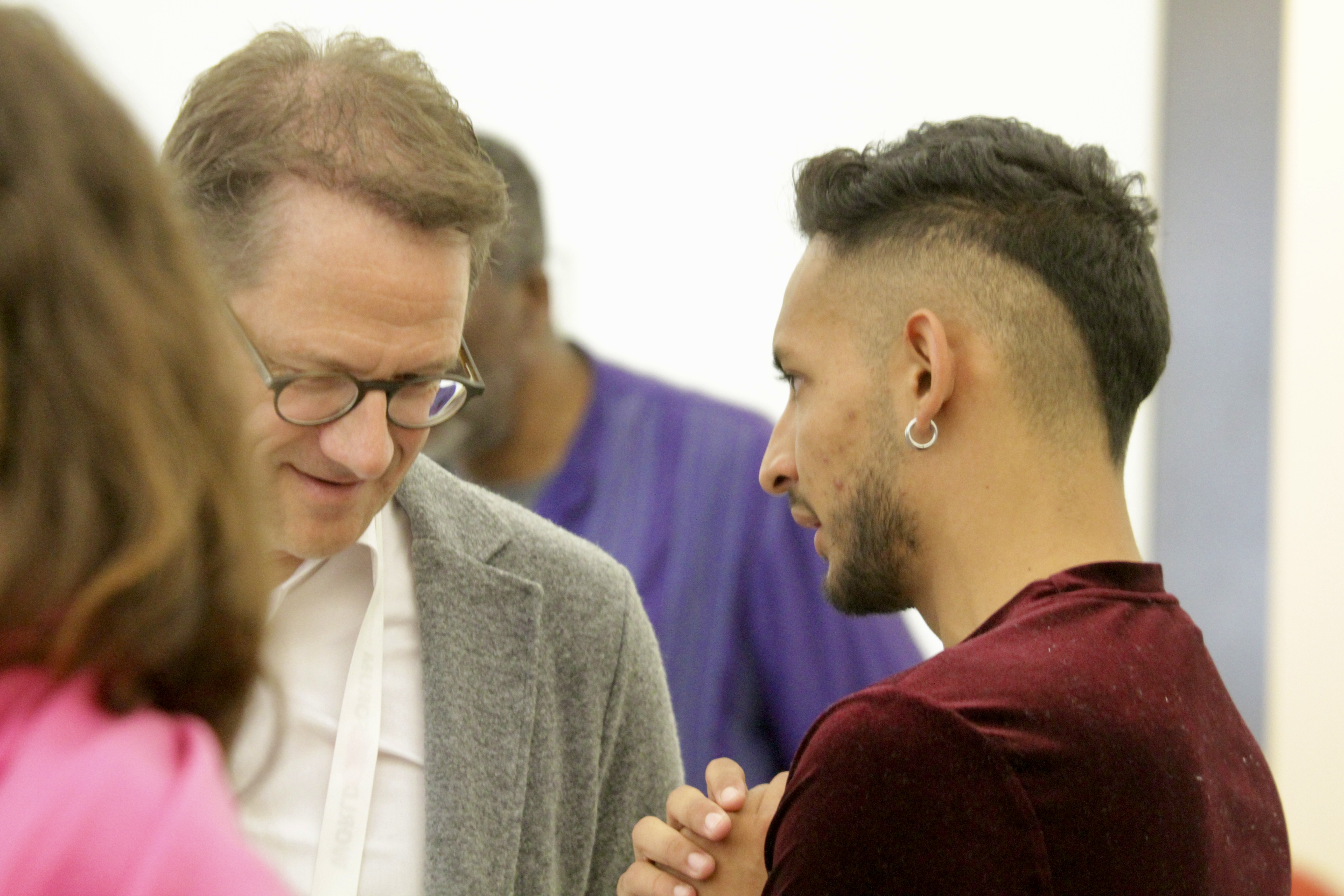
Tilo Ferrari talking to a young person at the World Child Forum.
I very much hope that a product from the event will have a big impact: The children and young people have filled an overseas container with their wishes and hopes. They hung up posters with questions and painted the walls. This container will be set up on the market square in Davos next year at the World Economic Forum. Politicians from all over the world will get to see it. After that, the container will go on tour through Europe to spark discussions in many different places and, in the best case, to start discourses. I am really excited about what the World Child Forum has created at its premiere - and it was only the dress rehearsal for the first official event next year.
About the World Child Forum
The World Child Forum (WCF) is an independent initiative that takes place as a complementary event to the World Economic Forum in Davos - at the same location, in the same rooms and with the same claim to social relevance. The WCF gives children and young people from all over the world the opportunity to come together, network and take jointly developed ideas and initiated projects back to their home continents and develop or implement them there. Organizers and participants alike take the unadulterated and, in the best case, visionary perspective of children and young people: the adults of tomorrow. www.world-child-forum.org