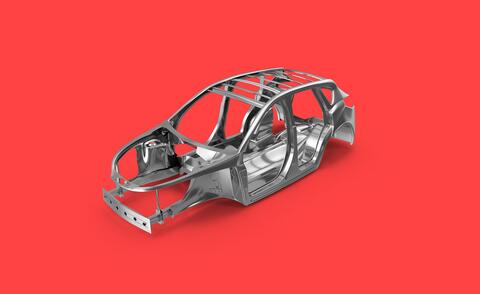
The interim manager was commissioned as CEO and CRO to restructure and realign a well-known group of companies in the vehicle construction sector.
The company, with headquarters in North Rhine-Westphalia, a plant in Brandenburg and two subsidiaries in Poland and Russia, produced truck bodies, trailers, semi-trailers and vans for courier and parcel service providers. When the interim manager joined the company, the group employed 750 people and generated sales of €100 million. Of these, 200 were employed in Russia, 150 in Poland and 400 in Germany. Profits and a positive cash flow were only generated in Russia.
Initial situation: Group threatened as a going concern and in a strategic trap
The company was in direct competition with five overpowering market competitors in Western Europe in the main truck body segment and had no chance of gaining the necessary market share. The main components alone were five times more expensive to procure than the competition. In addition, the competition in this market segment was already tightly organized industrially and had a sometimes very dense sales and service network.
The increasingly price-competitive freight forwarding and rental market, worth billions, was dominated by the inexpensive standard solutions of the major competitors. The German company had already tried to serve market niches with special solutions in the past. However, over the years, the company's complexity had increased and customers were less and less willing to pay the price differences to the standard solutions. This was compounded by growing dissatisfaction due to poor quality management and unacceptable delivery reliability.
Numerous weaknesses identified in production and organization
In addition, production was not organized in a lean manner, supply chain management was inadequate and high error costs weighed on the operating result. High inventories were an additional burden on cash flow. There was no adequate customer relations management, and the sales department was demoralized and disoriented.
In order to eliminate the numerous sources of error and move into an offensive position, the company decided to centralize the former main plant in North Rhine-Westphalia and the German activities in Brandenburg. However, key employees and know-how carriers were not prepared to relocate. In addition, recruitment at the new headquarters was extremely slow.
Restructuring the management organization and recruiting new managers
An initial challenge for the interim manager was to persuade key employees to relocate from NRW to Brandenburg or at least to stay temporarily. At the same time, he arranged internal reassignments in some specialist areas following numerous discussions. In addition, he recruited management staff for the new headquarters based on personal contacts and via headhunters and reduced staff no longer required in NRW.
In addition, the interim manager eliminated two management levels as part of the new organizational structure and initiated a comprehensive training and management trainee programme as well as regular feedback meetings.
Subordinate business segment developed into a new core segment
At the very beginning of the mandate, the interim manager focused on the group's competitiveness - and identified a business segment with potential. In Brandenburg, the company produced some of its vehicle bodies and extensions for a global parcel service provider. This business area had previously been of secondary importance. However, the East German location had in-depth expertise in production and logistics. The market competitors in this segment were fragmented and none of the companies had economies of scale. The interim manager took this as an opportunity to sustainably expand this product line.
Quickly acquired first order with a volume of 20 million euros
He immediately held talks with vehicle manufacturers and dealers as well as a leading German package service provider. After some development work and difficult negotiations, the company prevailed in the bidding process. The order was worth €20 million. The site in eastern Germany was thus excellently prepared to quickly reduce the loss-making production of the main product group, semi-trailers, while keeping important employees in the company.
Modern line assembly set up using lean management methods
The interim manager worked with a new team to set up a modern, synchronized line assembly. Once the pilot series had been completed, the ramp-up phase began in the purpose-built factory hall. Throughput times steadily decreased, error rates were successively reduced through a dedicated zero-defect strategy and SCM was focused and optimized. Kanban and continuous improvement initiatives as well as daily target/actual deviations were visualized and tracked in a daily management process and action plans were constantly updated until the respective interim targets were reached. The focus on delivery reliability, a corresponding zero-defect strategy and consistent cost management were initially at the heart of all measures.
At the same time, space had to be gained for the growing future space requirements of the parcel vans and trucks. The interim manager therefore worked with shareholders and employees to relocate the entire production of container transporters in Germany to the Polish plant.
Stopping losses and initiating a sustainable turnaround in 18 months
The interim manager was able to stop the losses in Germany and Poland and initiate a sustainable turnaround within the 18-month mandate. By implementing a new strategy, he set a milestone for the realignment of the company. The market segment he expanded is still the company's main business segment today. Overall, by the end of the mandate, the number of employees in the group had been reduced from 750 to 640 with comparable sales and significantly increased margins.
The client and employees were very satisfied with the work of the interim manager. He was later mandated by the same client for a further restructuring.